

History
Over a decade of making a difference.
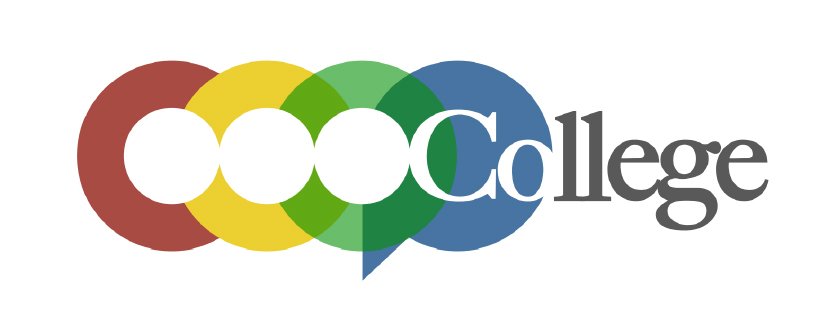
The first COOP Careers logo. Drafted in 2013 by Kalani Leifer.
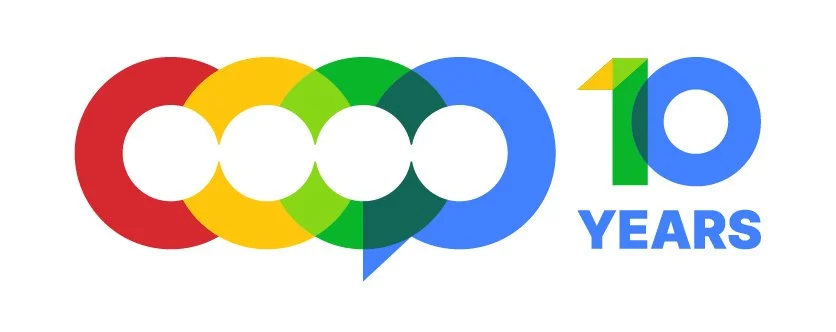
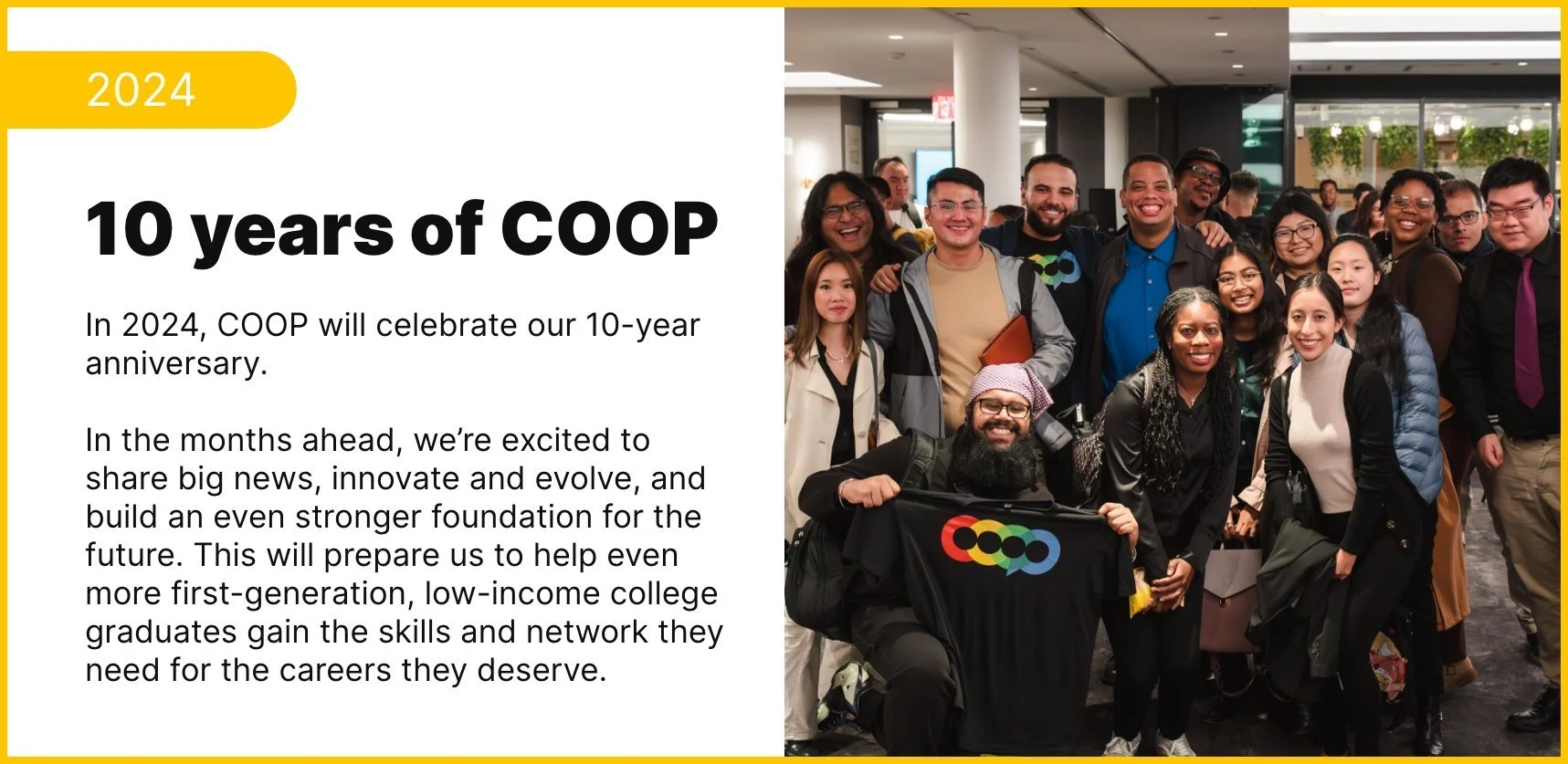
COOP Careers’ 10th anniversary logo.
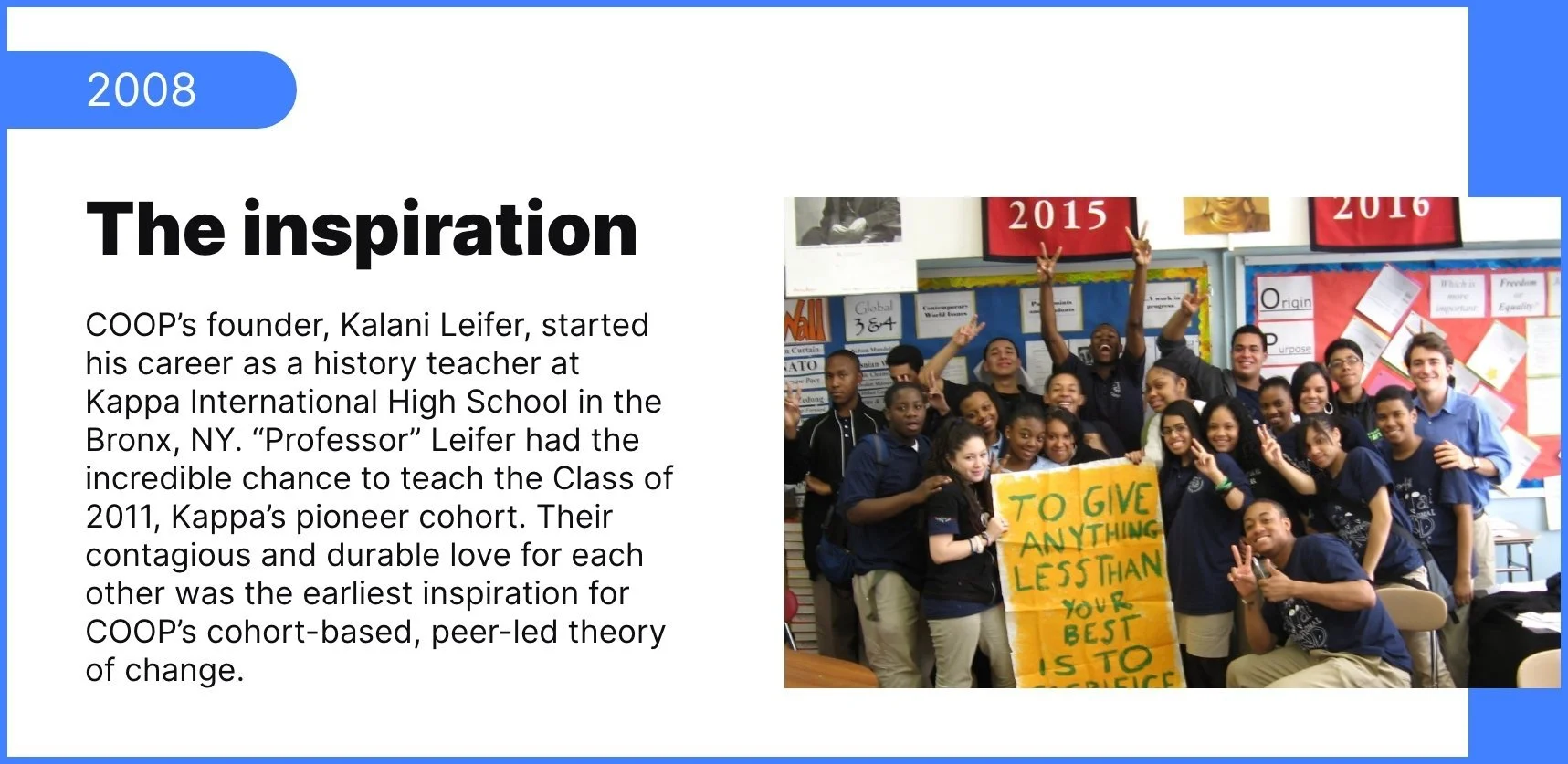
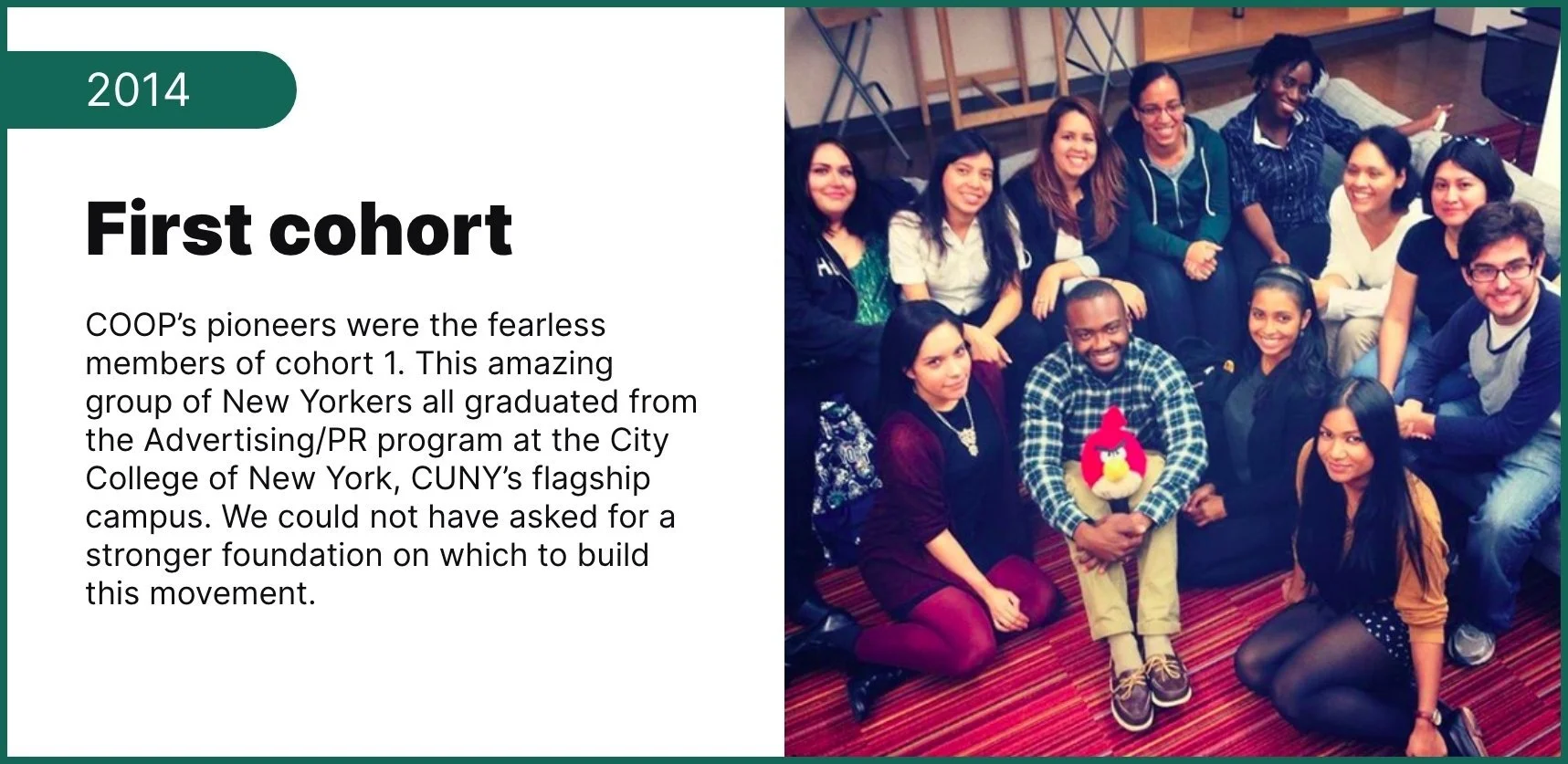
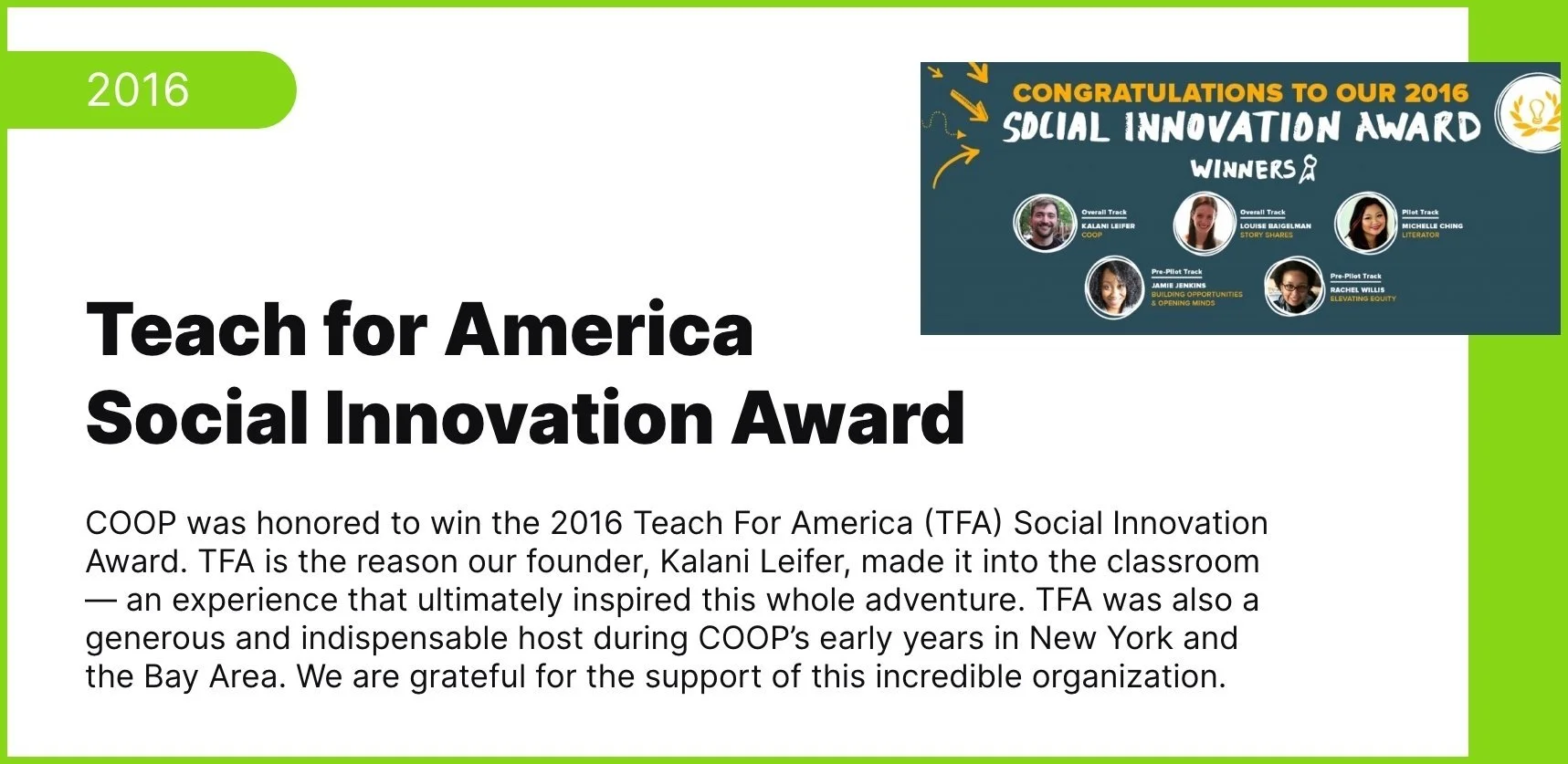
COOP was founded in 2014 by Kalani Leifer, a former high school history teacher in the Bronx, NY. As an educator, Kalani encouraged students to believe in the transformative power of higher education, emphasizing that their decisions would shape their future. He believed, like many, that earning a bachelor’s degree was the surest path to economic independence, mobility, and long-term prosperity.
However, after several years in the classroom, Kalani confronted a harsh reality: for many students–particularly those who were first-generation or from low-income backgrounds– that promise was not being fulfilled. Every year, one million first-generation and low-income students earn a bachelor’s degree; four years later, half are underemployed (in jobs that don’t require a degree) or out of work. A 2024 Strada Education study found that people not employed within a year of graduating college have just a 27% employment rate a decade later, with the students like those Kalani taught–first-generation and low-income college grads–disproportionately affected.
COOP Careers was created to directly address this inequity. Over the last 12 years, COOP has developed a unique fellowship to help first-generation and low-income graduates secure their first good job.
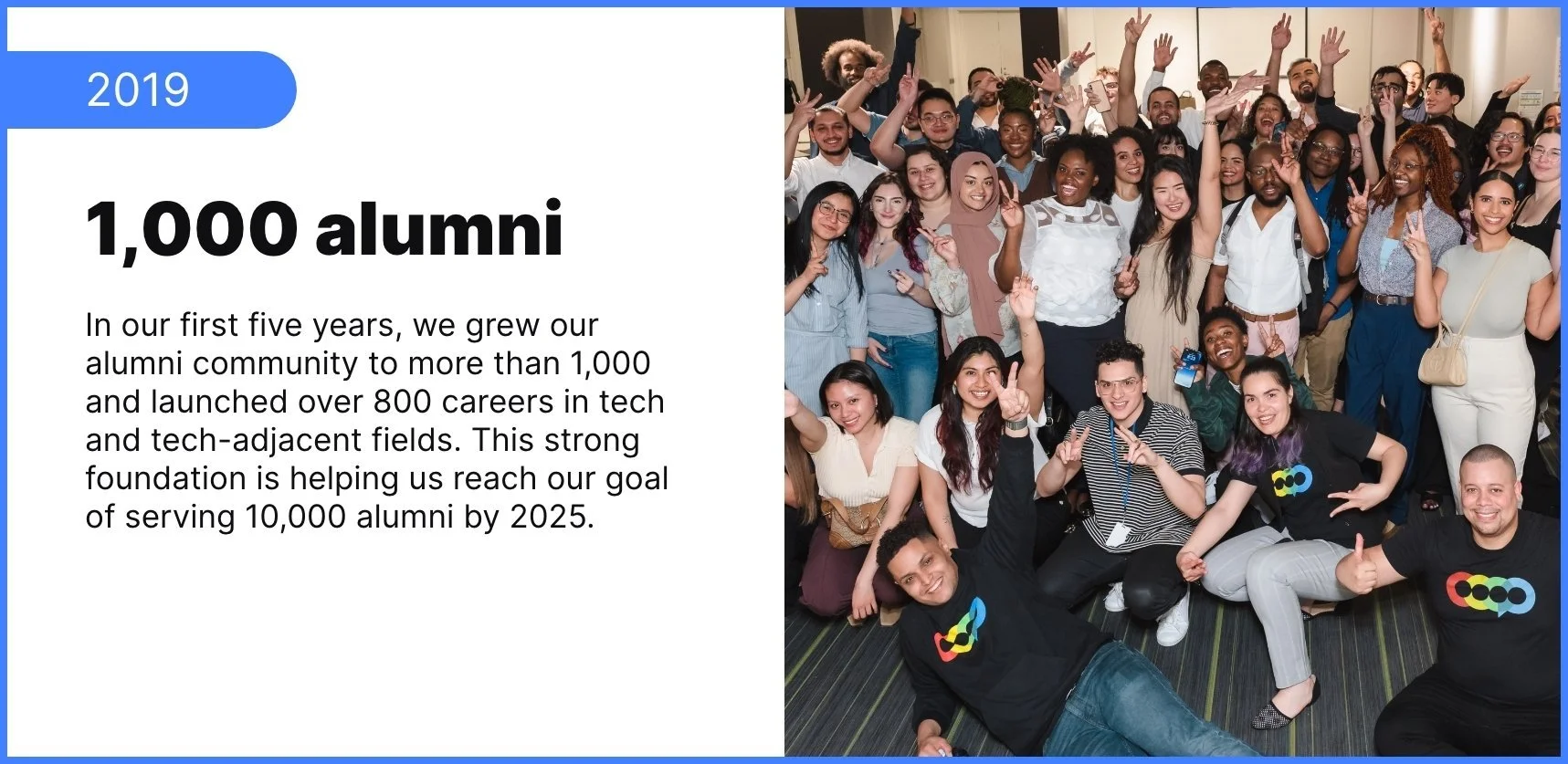
We began the decade with a dozen fellows and a couple volunteers; we will finish 2026 with a powerful community of 10,000+ fellows and alumni helping to propel themselves and each other into upwardly mobile careers.
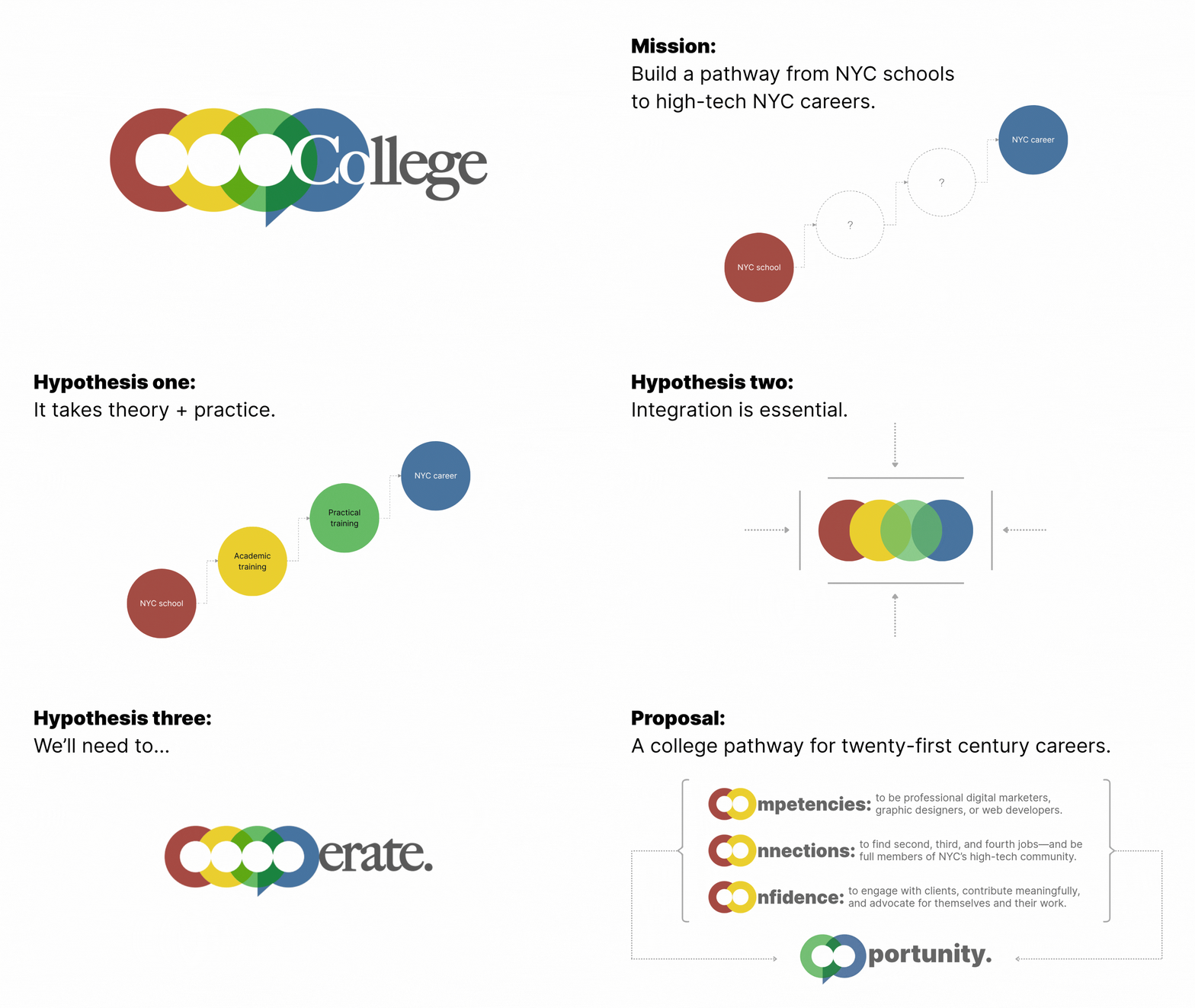
Take a look at COOP Career’s logo origin! The logo and mission have evolved over the years, but the meaning remains. We’re dedicated to providing a pathway to upward career mobility for all first-gen and low-income college grads.
Where our name and logo came from
Even before COOP enrolled its first fellows, our founder Kalani Leifer was already imagining the organization’s future, including the logo that would come to define it. In November 2013, Kalani sketched a proposal called CoopCollege. It started from one question: what would it take to create a meaningful pathway from New York City schools into the city's growing tech economy?
His answer centered on three hypotheses: students would need both theory and practice; and the two had to be integrated from the start, not bolted together. Neither would succeed in isolation., His third hypothesis read simply, "we'll need to cooperate," with the "coop" drawn as four colored rings – a visual idea that would become part of COOP’s identity. The name was there from the very first draft.
The logo grew out of the same thinking. Kalani drew four overlapping rings, and each one performed double duty. Read one way, they spell C-O-O-P, with a small tail on the blue ring forming the stem of the P. Read another way, they map a student's journey as that early proposal imagined it: a college degree to a hands-on classroom, with experiential learning opportunities, and connections to employment. The rings overlap because each stage is meant to feed the next.
The model has evolved, but the core belief from 2013 remains unchanged: a college degree alone is often not enough to land that first great job. First-generation and low-income grads also need four essential ingredients: opportunity, competencies, connections, and confidence. Connections became the heart of COOP’s approach. Through a community of peers and alumni who help move one another forward, alongside employer partners who connect alumni to upwardly mobile careers, COOP turns these connections into pathways for opportunity.
 Donate